



CA VII
Carbonic Anhydrase VII (CA VII) is a cytosolic zinc metalloenzyme of the α-carbonic anhydrase family that catalyzes the reversible hydration of carbon dioxide to bicarbonate and protons, thereby contributing to intracellular pH regulation and neuronal acid-base homeostasis[1][2]. CA VII is highly relevant in the nervous system, where neuronal expression supports bicarbonate-dependent signaling mechanisms and influences GABAergic neurotransmission through regulation of intracellular bicarbonate availability[3]. Mechanistically, CA VII facilitates the generation of bicarbonate ions that can enhance depolarizing GABA responses under conditions of elevated neuronal activity, linking carbon dioxide metabolism to neuronal excitability and network function[3]. In experimental models, neuronal CA VII expression has been associated with susceptibility to febrile seizures, supporting its relevance to epilepsy-related research and studies of neuronal hyperexcitability[3]. Compared with related cytosolic isoforms such as CA II, CA VII exhibits a more restricted neuronal expression pattern, making it particularly valuable for investigating brain-specific carbonic anhydrase functions and disease mechanisms[3][4]. This isoform distinction has stimulated efforts to develop selective CA VII inhibitors because nonselective inhibition of multiple carbonic anhydrase isoforms may produce unwanted off-target effects[5][6]. Accordingly, structure-based drug discovery and crystallographic studies have identified CA VII as a promising target for the development of isoform-selective inhibitors for neurological disorders, particularly epilepsy and other central nervous system diseases[5][6].
All Product Categories
-
CA VII Produits associés (1)
Produits associés (1)

-
Elsulfavirine
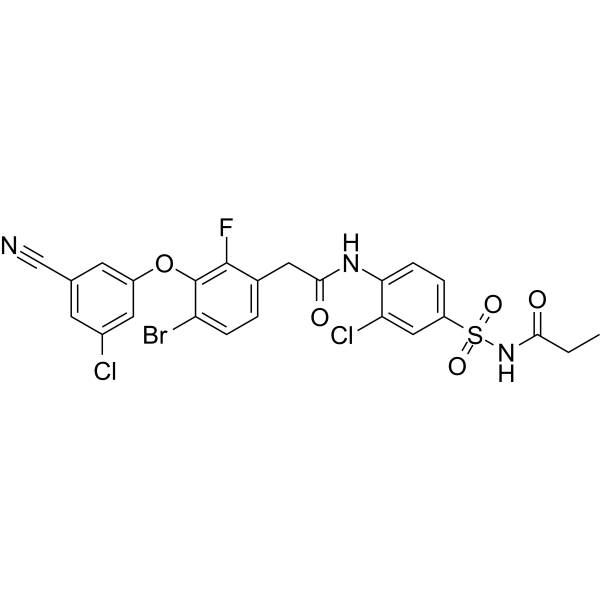 0 ImagesSynonyms: R-1206Elsulfavirine (R-1206) is an orally active human carbonic anhydrase (carbonic anhydrase, CA) inhibitor and an allosteric inhibitor of HIV-1 non-nucleoside reverse transcriptase (NNRT). Elsulfavirine also targets and blocks the interaction between adenylosuccinate lyase (ADSL) and insulin-induced gene proteins INSIG1/2, blocks SREBP-1-mediated de novo lipid synthesis, and inhibits the proliferation of liver cancer cells. The combination of Elsulfavirine and Lenvatinib (HY-10981) produces a synergistic anti-tumor effect. Elsulfavirine is converted into the active metabolite VM1500A in vivo, blocks the DNA polymerase activity of reverse transcriptase, and inhibits HIV-1 replication. Elsulfavirine exhibits a Ki of 1960 nM-52400 nM against human carbonic anhydrase isoforms including I, VII, VI, VA, VB, IX, XIII, XIV. Elsulfavirine is used in studies related to HIV-1 infection and liver cancer.



